React Developer Beginner to Expert
A roadmap for learning React, from JSX and components to hooks, state management, performance optimization, testing, and production-grade architecture.
React Developer Beginner to Expert
This roadmap takes you from JavaScript prerequisites through JSX, hooks, and state management, and on to data fetching, meta-frameworks, performance, and testing. Work through the stages in order, build something small at each step, and treat the optional topics as branches to explore once the required ones feel solid.
Prerequisites (JavaScript and TypeScript)
Modern JavaScript
Understand ES modules, arrow functions, destructuring, spread/rest, promises, and array methods like map and filter. Most React confusion is really JavaScript confusion.
TypeScript basics
Learn types, interfaces, generics, and how to type props and state. Modern React codebases are overwhelmingly TypeScript.
JSX and Rendering Fundamentals
JSX syntax
Understand that JSX is syntactic sugar for function calls, how expressions embed with braces, and why you return a single root.
The render model
Learn how React builds a tree, diffs it, and updates the DOM, so re-renders stop feeling like magic.
Components, Props, and Composition
Function components
Write components as functions that take props and return JSX. Class components are legacy; start with functions.
Props and composition
Pass data down with props and compose components together, including the children prop, instead of building deep inheritance.
Thinking in components
Practice breaking a UI into a component tree, deciding where each piece of state and markup belongs.
State and Core Hooks
useState
Manage local component state and understand that setting state schedules a re-render rather than mutating a variable.
useEffect
Run side effects like data fetching or subscriptions, and understand the dependency array and cleanup function.
Rules of hooks
Learn why hooks must be called at the top level and only from React functions, and what breaks when you ignore this.
Advanced Hooks
useReducer
Manage more complex state transitions with a reducer, which scales better than many useState calls.
useMemo and useCallback
Memoize expensive computations and stable function references, but only when profiling shows you need them.
useRef
Hold mutable values that persist across renders without causing re-renders, and reference DOM nodes directly.
Custom Hooks and Reusable Logic
Writing custom hooks
Move reusable stateful logic into a use-prefixed function, so components stay focused on rendering.
Composition over duplication
Recognize when repeated useEffect or useState patterns should become a shared hook.
Rendering Lists and Conditionals
Conditional rendering
Render different UI based on state using ternaries, logical AND, and early returns.
Lists and keys
Render arrays with map and give each item a stable key, and understand why index-as-key causes subtle bugs.
Forms and Controlled Components
Controlled inputs
Bind input values to state so React is the single source of truth, and handle onChange events.
Form libraries
Learn a library like React Hook Form for validation and performance once forms get large.
Context and Prop Drilling
Context API
Provide and consume shared values (theme, auth, locale) with createContext and useContext.
When not to use context
Understand that context is not a state manager and that overusing it causes wide re-renders.
State Management Libraries
Redux Toolkit
Learn modern Redux, which needs far less boilerplate, for large apps with complex shared state and predictable updates.
Lightweight stores
Explore Zustand or Jotai for simpler global state without the Redux ceremony.
Data Fetching
React Query or SWR
Use a data-fetching library to handle caching, revalidation, and loading/error states instead of hand-rolling useEffect fetches.
Server state vs client state
Learn to separate cached server data from local UI state, which is the insight these libraries are built on.
Routing and Meta-Frameworks
React Router
Add client-side routing, nested routes, and route params for multi-page single-page apps.
Next.js
Learn the most common React meta-framework for server rendering, file-based routing, and full-stack features.
Remix
Explore an alternative meta-framework focused on web standards and data loading.
Performance, Testing, and Production
Performance optimization
Use the React Profiler to find real bottlenecks, then apply memoization, code splitting, and lazy loading where they matter.
Testing
Write tests with React Testing Library and Vitest, and add end-to-end tests with Playwright for critical flows.
Patterns and architecture
Learn common patterns and anti-patterns, folder structure, and how to keep a growing codebase maintainable.
Comments
Was this useful?
You might also enjoy
More posts on similar topics
Frontend Developer Beginner to Expert
Frontend Developer Beginner to Expert This roadmap walks you from absolute beginner to a strong, hireable frontend engineer. Work through the stages in order. The early ones build the mental model
JavaScript Beginner to Expert
This roadmap guides you through the complete JavaScript journey from writing your first variable to architecting production-grade applications on the frontend and backend. Work through each stage sequ
Full-Stack Developer Beginner to Expert
Full-Stack Developer Beginner to Expert This roadmap walks you from your first web page to shipping and operating a complete production application. Work the stages in order. Build the frontend fun
Backend Developer Beginner to Expert
Backend Developer Beginner to Expert This roadmap walks you from your first server-side program to designing scalable, secure systems. Work through the stages in order. Nail a language, the command
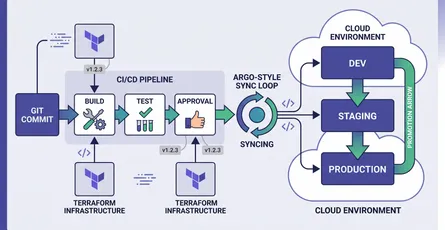
Release Engineer Beginner to Expert
This roadmap takes you from release engineering principles and version control mastery through to advanced GitOps patterns and multi-account AWS delivery at scale. Each stage builds on the last. Treat
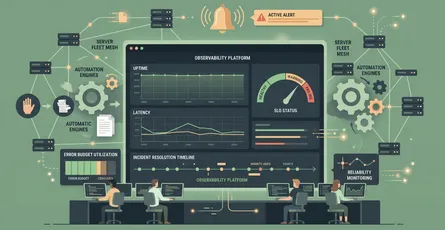
Site Reliability Engineer Beginner to Expert
This roadmap takes you from the fundamentals of Linux and systems thinking through to advanced observability, chaos engineering, and SRE organisational culture. Each stage builds on the last and ties
6 related posts